
What Is Included in a Standard Vehicle Inspection?
Table of Contents
What Is Included in a Standard Vehicle Inspection? The Core Systems
How a Safety Inspection Differs From an Emissions Test or Pre-Purchase Check
What Do Mechanics Check During an Inspection? Inside the Bay
How State Inspection Requirements Vary by Vehicle Type
1. Whether a periodic safety inspection is required at all
2. How often, and on what trigger
3. What vehicle class you are in
4. Age, weight, and use exemptions
What this means for your checklist
Vehicle Inspection Duration, Cost, and What to Bring
How long a standard inspection takes
What it costs, and what the fee does and does not cover
What to bring
How to prepare so the visit goes fast
What a Standard Inspection Does Not Cover
What Happens If Your Vehicle Fails an Inspection
Frequently Asked Questions
Last Updated: October 11, 2026
What Is Included in a Standard Vehicle Inspection? The Core Systems
A standard vehicle inspection is a state-mandated safety check of your car's brakes, tires, lights, steering, suspension, and visibility equipment against minimum safety standards. At Cruiser Auto Repair, we walk customers through this process every day.
The exact vehicle inspection checklist varies by state, but the core systems stay the same. Below, we break down each one and show you how to spot problems before you reach the shop.
How a Safety Inspection Differs From an Emissions Test or Pre-Purchase Check
These three inspections get lumped together constantly. They are not the same thing.
Safety inspection: Confirms brakes, lights, tires, and other systems meet your state's minimum safety standard.
Emissions test: Measures exhaust output against clean air rules. It says nothing about whether your brakes work.
Pre-purchase inspection: A paid, voluntary deep check before you buy a used car.
Most states require a safety inspection on a set schedule. Emissions testing applies only in certain areas. A pre-purchase check is your call, and we recommend it every time you buy used.
What Do Mechanics Check During an Inspection? Inside the Bay
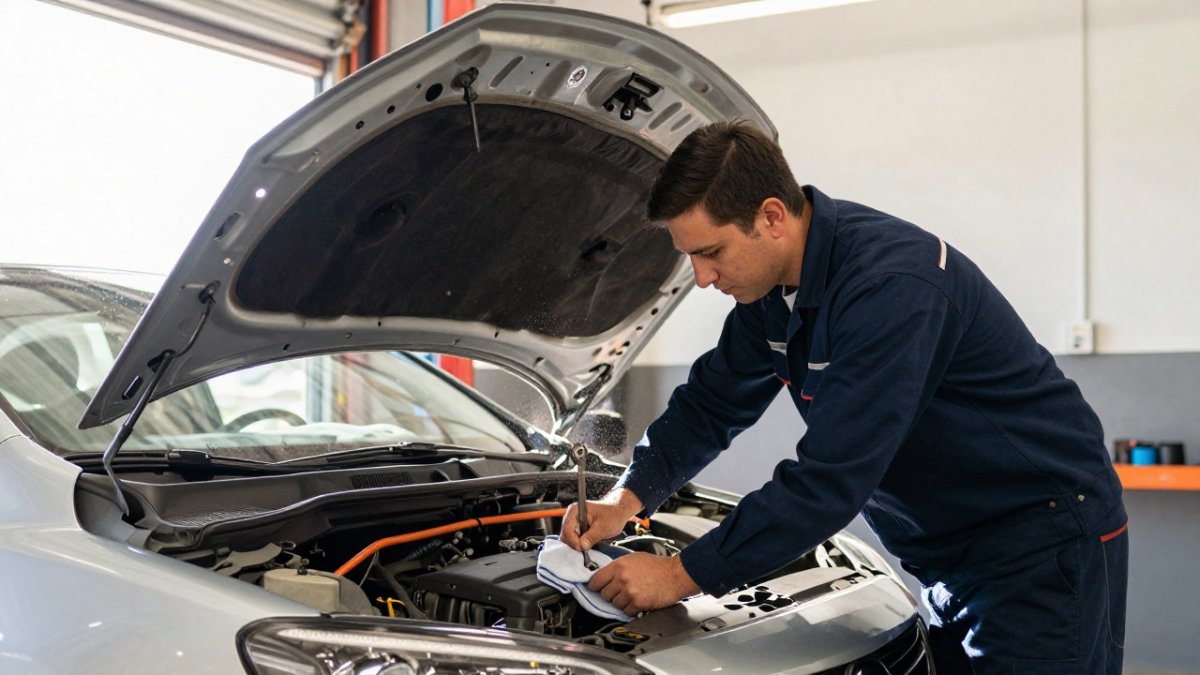
A mechanic checks every system that affects your control of the car and your ability to see and be seen, following a fixed sequence so nothing gets skipped.

Walk around the car and confirm every light works
Press each tire and check tread with a coin
Look for fluid spots under the car
Pro Tip Check your lights with a friend or a wall. Brake lights and turn signals are the two most common failures we see, and you cannot test them alone from the driver's seat.
How State Inspection Requirements Vary by Vehicle Type
"Standard" is a moving target: there is no single national vehicle inspection. Requirements are set at the state level, and a few states set no periodic safety inspection at all, so a checklist accurate in one state can be incomplete in another.
The practical way to read your own requirements is to sort them along four axes.
1. Whether a periodic safety inspection is required at all
States fall into roughly three groups:
Periodic safety inspection states, the vehicle must be inspected on a set cycle, commonly annually or biennially, at a state facility or an approved private station.
Emissions-only areas, some states require no periodic safety inspection but do require emissions testing in certain counties or metro areas, usually tied to federal clean air requirements.
No periodic inspection, a minority of states require neither a routine safety inspection nor an emissions test for most passenger vehicles.
In a no-inspection state, a "standard vehicle inspection" is almost always a voluntary pre-purchase or diagnostic inspection, not a legal requirement.
2. How often, and on what trigger
Inspection cycles are usually tied to one of these:
A fixed calendar interval (every 12 or 24 months)
Vehicle registration or registration renewal
A change of ownership or an out-of-state title transfer
Knowing your trigger matters: missing a registration-linked inspection can affect your ability to renew plates, not just your ability to drive.
3. What vehicle class you are in
The same state often applies different rules to different vehicles:
Passenger cars and light trucks, the most commonly inspected class, and the one most checklists are written for.
Heavy-duty trucks and commercial vehicles, frequently inspected more often and against additional equipment standards, including items like brake adjustment and load securement that passenger cars are never checked for.
Motorcycles, often inspected on a separate schedule and against a shorter list (brakes, tires, lights, steering, exhaust, mirrors).
4. Age, weight, and use exemptions
Many states carve out exemptions based on:
Vehicle age (older vehicles sometimes exempt, sometimes held to the same standard)
Gross vehicle weight rating
Whether the vehicle is registered in a county that requires emissions testing
What this means for your checklist
Treat any published checklist, including the one below, as the common core, not the complete legal standard for your situation. The core systems (brakes, tires, lights, steering, suspension, visibility, restraints, exhaust) appear in nearly every state's safety inspection; what changes is the cycle, the exemptions, whether emissions is bundled in, and how strict the thresholds are.
Before your due date, confirm three things with your state's motor vehicle agency:
Whether your vehicle class and county require an inspection
How often, and what event triggers it
Whether emissions testing is separate or combined
Key Takeaway There is no national standard vehicle inspection. The checklist is broadly consistent across states; the schedule, exemptions, and pass/fail thresholds are not. Always verify against your state's current rules rather than applying another state's checklist.
Vehicle Inspection Duration, Cost, and What to Bring
This is the part most checklists skip, and it determines whether your appointment goes smoothly. Here is how to plan it.
How long a standard inspection takes
A routine safety inspection itself is usually quick, commonly 20 to 45 minutes of actual inspection time. What stretches the visit is everything around it:
Walk-in vs. appointment, an appointment slot usually keeps you close to the inspection time; a walk-in can add an hour or more of waiting.
Emissions testing, if your state bundles or separately requires it, add time for the test and any queue.
Reinspection, if the vehicle fails, the return visit adds a second trip and its own wait.
Plan on one hour for a scheduled safety inspection, and a half day if you are also doing emissions or expect a repair.
What it costs, and what the fee does and does not cover
Inspection pricing is set differently depending on the state:
State-capped fees, some states set a maximum fee that any station may charge for the inspection.
Station-set fees, other states let the shop set its own inspection price, so it varies by location and shop.
Bundled fees, where safety and emissions are combined, the fee may be a single combined charge or two separate line items.
The key distinction: the inspection fee covers the inspection, not the repairs. If your vehicle fails, the cost to fix the failed items is separate and quoted by the shop, so a cheap inspection fee tells you nothing about repair costs.
Two related costs to ask about up front:
Reinspection fee, many states allow a reduced or waived fee if you return within a set window with the failed items repaired.
Diagnostic fee, if the shop needs to diagnose why a system failed (rather than just replace a known-bad part), that may be billed separately from both the inspection and the repair.
Pro Tip Ask two questions when you book: "What is the inspection fee, and what is the reinspection fee if it fails?" Those two numbers, not the inspection fee alone, are your real out-of-pocket exposure.
What to bring
Requirements vary by state, but the common set is:
Vehicle registration, proof the vehicle is registered and which class it is in
Proof of insurance, often required to be current and valid on the inspection date
Driver's license, for identity and to release the vehicle to you
If you are returning for a reinspection after a failure, bring the repair receipts or documentation for the corrected items; some states require proof of repair, and some require a licensed facility to have done it.
How to prepare so the visit goes fast
Run the driveway checklist below before you book, so you are not paying for a reinspection over a dead bulb.
Clear the driver's area and trunk so the technician can reach the controls and required equipment (spare, jack, warning devices).
Have your documents in the car, not at home.
Key Takeaway Budget for the inspection fee plus a possible reinspection fee, bring registration, insurance, and license, and remember that the inspection fee never includes the cost of repairs. The cheapest inspection is the one you pass the first time.
What a Standard Inspection Does Not Cover
A safety inspection is not a full health check. It does not assess:
Engine performance or transmission condition
Oil life, coolant, or other fluid condition beyond leaks
Brake pad life remaining, only whether they meet the minimum
That last point matters. A car can pass inspection with a transmission about to fail. If you want a full picture, ask for a separate diagnostic.
What Happens If Your Vehicle Fails an Inspection
You get a written report listing each failed item.
Here is the part most drivers miss: a failed inspection is not a dead end.
At Cruiser Auto Repair, our technicians handle the repairs and the paperwork.
A failed inspection is stressful, but it rarely means your car is beyond saving.
Schedule your appointment with Cruiser Auto Repair and get your vehicle inspection done right the first time.
Frequently Asked Questions
What do mechanics check during a standard vehicle inspection?
A standard vehicle inspection covers the systems that keep you safe on the road: brakes (pads, rotors, calipers, lines, and fluid), tires (tread depth and condition), exterior lights and reflectors, steering and suspension components, windshield and wipers, mirrors, seat belts, and the horn. Some states also require an emissions test, which checks your exhaust system and fluid leaks separately. The exact list depends on your state's requirements, but these core safety items appear on nearly every standard inspection.
How long does a vehicle inspection take?
Most standard safety inspections take 30 to 60 minutes. If your state requires an emissions test alongside the safety check, add another 15 to 30 minutes. Busy shops may need your vehicle for a few hours depending on their queue. Scheduling an appointment ahead of time usually shortens the wait. At Cruiser Auto Repair, we handle inspections efficiently so you are not without your car any longer than necessary.
What should I do before taking my car in for an inspection?
Run a quick pre-inspection checklist at home: test all lights (headlights, turn signals, brake lights, license plate lights), check tire tread depth with a penny, look for cracks in the windshield, test your wipers and horn, and confirm your seat belts latch properly. Fixing easy items like a burned-out bulb before you arrive saves you a failed inspection and a return trip. Also bring your registration and proof of insurance.
What happens if my vehicle fails an inspection?
If your vehicle fails, the inspector gives you a written report listing each failed item. In most states you have a set window, often 10 to 30 days, to make repairs and return for a re-inspection, sometimes at no extra charge. Some states allow a limited repair waiver if costs exceed a threshold. Driving on an expired inspection sticker can lead to fines, so address failures promptly. A shop that handles warranty claims, like Cruiser Auto Repair, can also coordinate covered repairs with your provider.
SCHEDULE YOUR APPOINTMENT

Comments